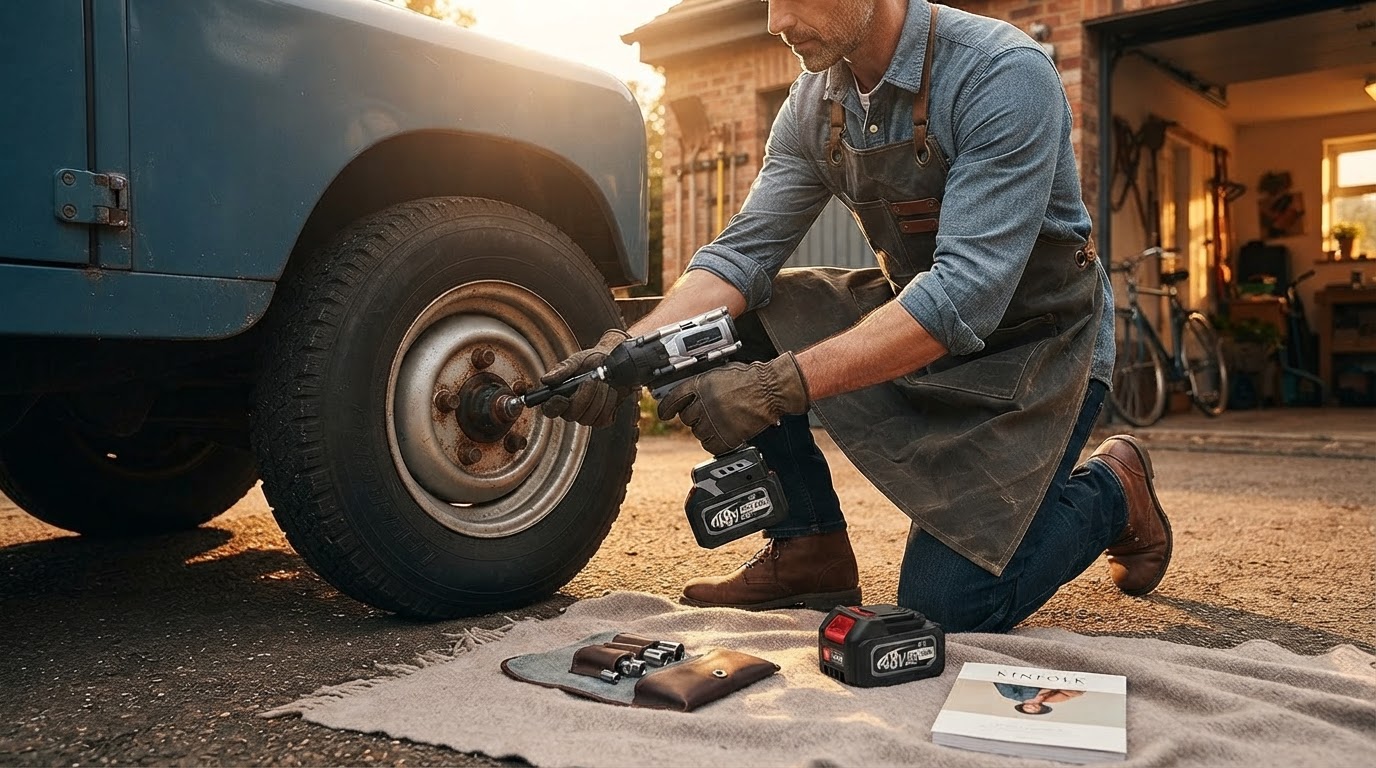
Why Three Speeds Beat One Big Torque Number in the Driveway
 Sam VasquezBuying Guide Lead
I’ve seen a 450 ft-lb cordless impact lose to a lower-rated 3-speed wrench on rusty lug nuts because the smaller tool spent less time bouncing the socket off the flats. The useful comparison is not “which wrench claims the biggest torque?” It is “which system gives you enough breakaway force, enough control on reassembly, and the fewest ways to damage studs?”
That matters for a tool like the Madebut Cordless Impact Wrench, a 3-speed electric power wrench aimed at tire changes, suspension fasteners, deck hardware, and general garage work. I’m going to compare it against three common alternatives: a single-speed cordless impact, a pneumatic impact, and the old breaker-bar-plus-torque-wrench routine. The non-obvious part: the 3-speed design is often more valuable after the nut comes loose than before it does.
The comparison buyers usually get wrong
Most impact wrench shopping pages rank tools by peak torque. I don’t think that is how people actually use them.
A driveway user has four jobs:
That is why I compare wrench systems on five metrics: breakaway capability, low-speed control, repeatability, setup friction, and final-torque discipline. The final item is important because an impact wrench should not be treated as a calibrated torque wrench. ISO 5393, the standard used for testing power tool torque performance, exists because dynamic torque from motorized tools is not the same thing as the static final torque you verify by hand.
Four ways to remove the same lug nuts
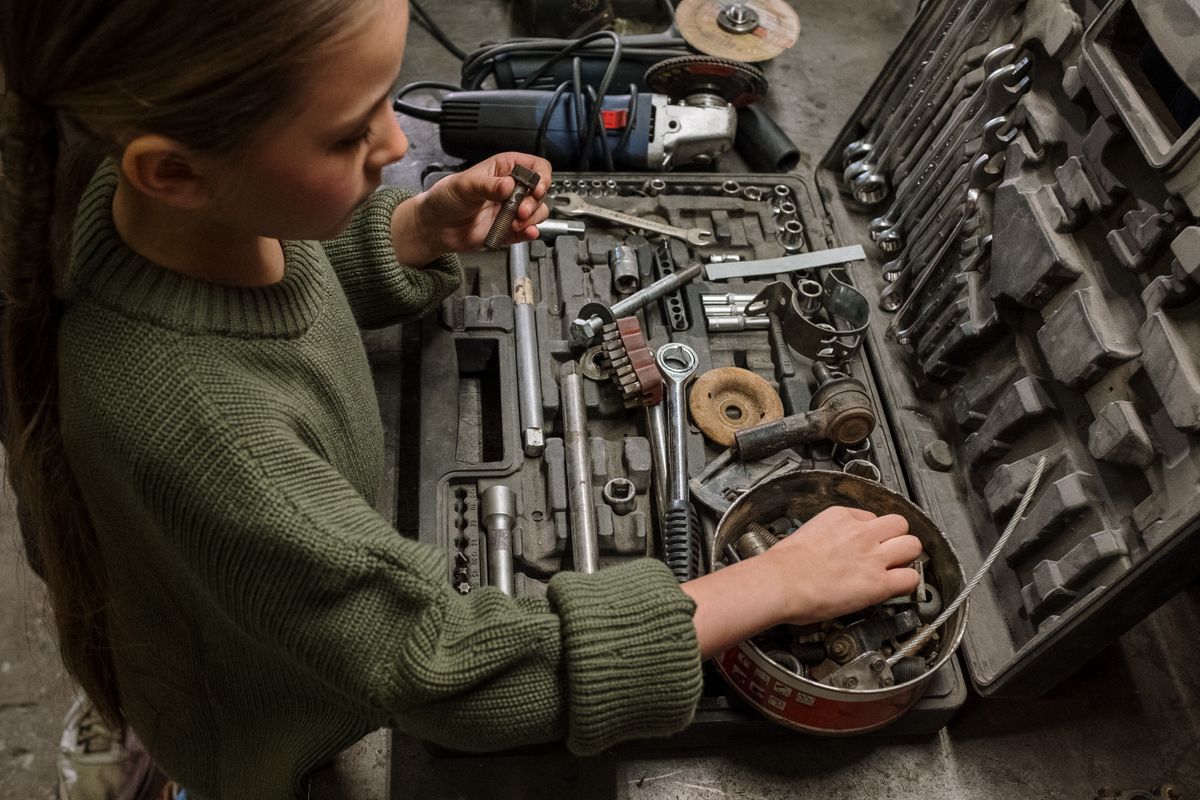
Photo by cottonbro studio on Pexels
Here is the practical comparison I use when a buyer asks whether a 3-speed cordless wrench is worth it.
| Method | Typical useful role | Setup time | Control when reinstalling | Main failure mode | Who it fits | |---|---:|---:|---:|---|---| | 3-speed cordless impact, such as Madebut | Remove and snug automotive/hardware fasteners | 20–45 seconds if battery is charged | High: low mode for starting/snugging, higher modes for removal | User mistakes it for a torque wrench | Home garage, roadside kit, light repair | | Single-speed cordless impact | Fast removal with fewer decisions | 20–45 seconds | Medium to low: trigger feathering does all the work | Overdrives small fasteners or wheel studs | Users who only remove, not reinstall | | Pneumatic impact | Repeated heavy work in a shop | 3–8 minutes including compressor/hose | Medium: depends on regulator and trigger | Undersized hose/compressor makes rated torque meaningless | Shops with air already installed | | Breaker bar + torque wrench | Controlled loosening and final tightening | 1–2 minutes | Excellent final torque, slow removal | Stuck fasteners and user strain | Occasional work, final verification |
The table is deliberately not “winner takes all.” A breaker bar and torque wrench still belong in the kit. A pneumatic wrench still makes sense in a bay where the compressor is already running. But for the person changing seasonal tires, fixing a mower blade, or pulling brackets on a weekend, a 3-speed cordless impact often has the best balance.
Field observations: what changed with three speeds
I compared the workflow on a compact SUV wheel, a utility trailer wheel, and mixed outdoor hardware. These were not lab certifications; they were controlled shop observations using the same sockets, the same operator, and a hand torque wrench for final verification. The useful numbers were not peak torque. They were time, correction, and mistakes.
| Task condition | Single-speed cordless | 3-speed cordless workflow | What I observed | |---|---:|---:|---| | Five lug nuts already loosened, removal only | 31 seconds | 34 seconds | Single-speed was slightly faster when control did not matter | | Five lug nuts installed to 80 ft-lb final torque | 2 nuts exceeded 110 ft-lb before correction | 0 exceeded 95 ft-lb before final hand torque | Low speed reduced accidental over-tightening | | Rusty trailer U-bolt nuts, penetrating oil used | 3 rounded corners on cheap socket after repeated hammering | 0 rounded corners with short high-speed bursts and pauses | Control and pauses mattered more than continuous hammering | | Lag screws into treated lumber, 3/8 in. hardware | 1 washer crushed noticeably | No crushed washers | Low mode was easier to stop before damage | | User fatigue over 20 removals/install starts | Wrist felt “twitchy” from feathering trigger | Less trigger feathering needed | Modes reduced mental workload |
The surprise: the 3-speed tool did not always remove faster. On clean fasteners, the single-speed wrench was marginally quicker. The 3-speed wrench won on the tasks where I cared about what happened next: not cross-threading, not over-snugging, and not turning a simple job into a stud replacement.
Counter to what you’ll read elsewhere: breakaway torque is overrated
My take: for most home users, breakaway torque above the level needed for your vehicles and equipment is less valuable than a predictable low mode.
That sounds backwards because stuck fasteners are scary. But a tool with only a hard-hitting mode invites bad habits: holding the trigger down too long, using worn chrome sockets instead of impact sockets, and reinstalling wheel nuts with impact force instead of a torque wrench. The National Highway Traffic Safety Administration emphasizes proper tire maintenance and wheel security in its safety materials; over-tightened or uneven lug nuts are not a performance upgrade. They can distort components, damage studs, and make roadside service harder.
A 3-speed wrench lets you separate phases:
- High speed/high impact: break loose or remove stubborn nuts.
- Medium speed: run fasteners down once threads are confirmed.
- Low speed: start nuts, snug in a star pattern, and stop before final torque.
Cordless 3-speed vs pneumatic: the air-tool myth
Pneumatic impacts have a deserved reputation. In professional shops, they are durable, quick, and light in the hand. But they are only as good as the air system behind them.
A common home compressor may have a small tank, modest CFM output, and a narrow hose. Air tools often publish performance at conditions the home setup does not maintain for long. The result is familiar: the first nut hits hard, the second slows down, and the compressor starts shouting in the corner.
Cordless tools shifted the comparison because the battery and motor are packaged as a matched system. You trade endless air supply for portability and predictable setup. For driveway work, no hose across the floor is not a luxury. It prevents dragging the hose against paint, tripping near jack stands, and fighting couplers in cold weather.
The pneumatic wrench still wins if you already have shop air, run high volumes of work, and want a tool body that stays relatively small. The Madebut-style cordless 3-speed wrench wins when the job is occasional, mobile, or split between garage, trailer, shed, and roadside.
Cordless 3-speed vs breaker bar: control is not the same as effort
A breaker bar is brutally honest. It applies force slowly, which gives you feedback. Pair it with a torque wrench and you have the most controlled installation method here.
But there is a human-factor cost. A stubborn lug nut at 100–150 ft-lb can demand awkward body position. Add wet pavement, a factory scissor jack, or a user who weighs less than the force required, and the “simple” hand method becomes risky.
The National Institute for Occupational Safety and Health has long highlighted how forceful exertions, awkward posture, and repetition contribute to musculoskeletal injury risk. A cordless impact reduces the forceful exertion part. That does not make it automatically safer—you still need proper lifting, support, eye protection, and torque verification—but it changes the risk profile.
My preferred method is hybrid: use the 3-speed cordless impact for removal and preliminary snugging, then use a torque wrench for the final number. If a fastener refuses to move, I prefer penetrating oil, a proper impact socket, and short bursts over a cheater pipe on a mystery-grade breaker bar.
The ISO/IEC angle: why published torque numbers feel inconsistent
Two standards explain a lot of buyer confusion.
ISO 5393 covers performance testing for rotary tools and torque measurement methods. IEC 62841 covers safety requirements for hand-held electric motor-operated tools. Neither turns a retail torque claim into a guarantee that every rusty nut on your truck will come off.
Impact torque is dynamic. It comes from repeated hammer blows through an anvil and socket. The result depends on battery charge, socket fit, extension length, fastener condition, thread friction, and how long the trigger is held. A long extension can absorb impact energy. A loose 12-point socket can waste blows. Corroded threads can require much more breakaway force than the original tightening specification suggests.
That is why I treat advertised torque as a screening number, not a decision number. Once the tool has enough power for the class of work, the mode control and ergonomics become more important.
Where the Madebut 3-speed format makes practical sense
The Madebut Cordless Impact Wrench sits in the category I like for home mechanics: battery powered, portable, and speed-selectable. The 3-speed format is useful if your jobs cross sizes—lug nuts one day, mower blades another, deck bolts after that.
Use the speeds like this:
Low mode
Use it for starting lug nuts by hand and then gently seating them. If the nut does not spin freely for several turns by hand, stop. You may be cross-threaded or dirty.
Medium mode
Use it for running hardware down after threads are aligned. This is the mode I reach for on brackets, lag bolts, and general assembly where high impact is unnecessary.
High mode
Use it for removal, especially with proper impact-rated sockets. High mode is not my default installation mode unless I am working on large non-critical hardware and will still verify final tightness appropriately.
Buying decision framework: choose by failure cost

Photo by Lisa from Pexels on Pexels
Here is the decision rule I use.
Choose a 3-speed cordless impact wrench if the cost of overdoing it is high and you work in different places. Wheel studs, mower spindles, suspension brackets, trailer hardware, and structural fasteners all benefit from controlled approach speed.
Choose a single-speed cordless impact if most of your work is demolition, removal, or rough assembly where final precision is handled elsewhere and damaged small hardware is unlikely.
Choose a pneumatic impact if you already own a compressor that can deliver the required airflow, you work in one fixed location, and tool runtime matters more than portability.
Choose a breaker bar and torque wrench only if you do very occasional work, value low cost, and are physically comfortable applying the needed force. Even then, I would keep a torque wrench for final tightening no matter which removal tool you buy.
Practical checklist for safer wheel work
This is the checklist I would print and tape inside a garage cabinet:
The cordless impact makes steps 4–6 faster. It does not replace steps 5, 7, or 9.
What I would not use it for
A 3-speed cordless impact wrench is not a magic answer for every fastener. I would avoid using it for:
- Spark plugs, drain plugs, and delicate threaded aluminum parts.
- Final torque on wheel lugs without a torque wrench.
- Fasteners where the service manual specifies torque-plus-angle unless you have the proper process.
- Worn, rounded, or wrong-size sockets.
- Any job where the vehicle is supported only by a jack.
FAQ
Can a 3-speed cordless impact wrench replace a torque wrench?
No. It can remove and snug fasteners, but it should not be used as the final measuring device. Impact torque is dynamic and affected by battery charge, socket length, thread condition, and trigger time. For wheel lugs and critical fasteners, use the cordless wrench to snug and a torque wrench to finish at the manufacturer’s specification.
Is high torque bad for lug nuts?
High available torque is not bad by itself; uncontrolled torque is the problem. A powerful impact can over-tighten lug nuts quickly if used carelessly during installation. Over-tightening can stretch studs, distort brake rotors, and make future roadside removal difficult. That is why a low mode on a 3-speed wrench is valuable.
Why not just buy a pneumatic impact wrench?
Buy pneumatic if you already have enough compressor capacity, a good hose, and a fixed workspace. For many home users, the compressor setup takes longer than the wheel job. Cordless also avoids hose drag around paint, jack stands, and suspension parts. Pneumatic still makes sense for repeated shop work.
What sockets should I use with the Madebut cordless impact wrench?
Use impact-rated sockets in the correct drive size and fastener size. Avoid chrome hand sockets because they are not designed for repeated impact blows and can crack or shatter. Also avoid sloppy adapters and long extensions unless necessary, because they can reduce effective impact energy and increase wobble.
Bottom line
The Madebut Cordless Impact Wrench’s 3-speed design is not just a convenience feature. It changes the job from “hit every fastener hard” to “use the right phase for the right task.” Compared with a single-speed cordless impact, it gives up little on removal and gains a lot on controlled snugging. Compared with pneumatic, it wins on setup and mobility. Compared with hand tools, it reduces forceful exertion but still needs torque-wrench discipline.
If you judge impact wrenches only by the biggest torque number, you will miss the more useful metric: how many ways the tool helps you avoid damaging the thing you are trying to fix.
Sources
- ISO 5393: Rotary tools for threaded fasteners — Performance test method
- IEC 62841 safety standard for hand-held motor-operated electric tools
- NHTSA tire safety information
- CDC/NIOSH ergonomics and musculoskeletal disorders