
What Happens If You Over-Torque or Under-Torque Lug Nuts?
Proper wheel fastener tension is essential for automotive safety. Incorrect clamping force leads to serious structural failures and costly repair bills. To better understand general wheel installation standards, read the main guide on tire torque and maintenance.
The Hidden Hazards of Incorrect Torque

Lug nuts are designed to hold wheels firmly against the vehicle hub. Achieving the precise torque level ensures that clamping force is evenly distributed across all studs.
What Happens When Lug Nuts Are Over-Torqued?

Photo by Kindel Media on Pexels
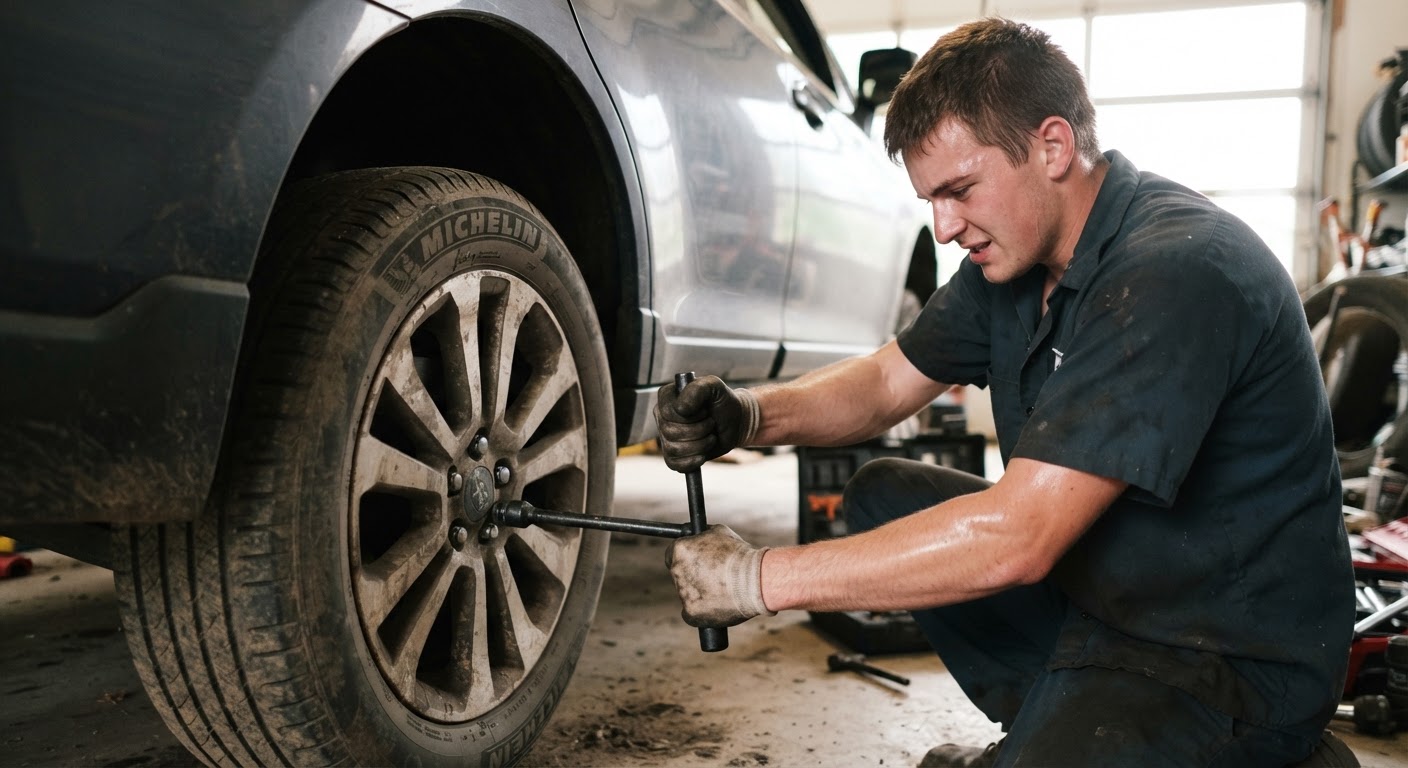
Applying excessive force using improper tools or uncalibrated impact guns stretches the wheel studs past their elastic yield limit. Over-torquing can cause:
- Snapped Wheel Studs: Over-stressed metal can shear off suddenly under driving stress.
- Warped Brake Rotors: Uneven clamping distorts the rotor, creating brake pedal vibration.
- Damaged Aluminum Alloy Wheels: Over-tightening can crack or deform lug seats.
The Dangers of Under-Torqued Lug Nuts
Under-tightening lug nuts is equally dangerous. Insufficient clamping force allows vibration during driving to gradually back the lug nuts off the stud threads. Symptoms include wheel wobble, severe steering vibration, and eventual wheel detachment.How Modern Power Wrenches Prevent Torque Mistakes
Photo by Marcus Goodman on Pexels
Using tools equipped with selectable output limits mitigates these hazards. The PRODUCT_TITLE offers 3-Speed adjustable settings, allowing users to select lower output modes when seating lug nuts to prevent accidental over-tightening before final torque checks. Its ergonomic grip provides smooth control, making tire service safe and efficient.
Read the full guide: Car Lug Nut Torque Guide: How Much Torque Do You Really Need?