Rethinking Torque: Why Control Outperforms Power in Impact Wrenches
 Maya ChenContributing Editor
The race for peak torque is a marketing gimmick; the most critical feature on a cordless impact wrench for cars is actually its lowest power setting. The conventional wisdom says that more breakaway torque is the defining metric of a superior tool. This obsession with raw power overlooks a fundamental reality of automotive work: bolts must be installed as well as removed. A tool designed only for maximum force becomes a liability during assembly, where precision is non-negotiable and over-torquing leads to stripped threads, stretched bolts, and damaged components.
The High Cost of Uncontrolled Power
High-torque impact wrenches excel at one task: breaking loose rusted and seized fasteners. For this, hundreds of foot-pounds of “nut-busting” torque are invaluable. The problem arises when that same brute force is applied to installation. Relying on trigger feathering to moderate a powerful, single-speed impact wrench is inconsistent and invites disaster. A momentary lapse in control can easily snap a 10mm bolt or strip the threads in an aluminum engine block. This turns a simple task into a costly repair. The danger isn't having too little power for removal; it's the inability to dial back that power for safe, repeatable fastening.
Precision Fastening: The Role of Low-Torque Mode
Photo by cottonbro studio on Pexels
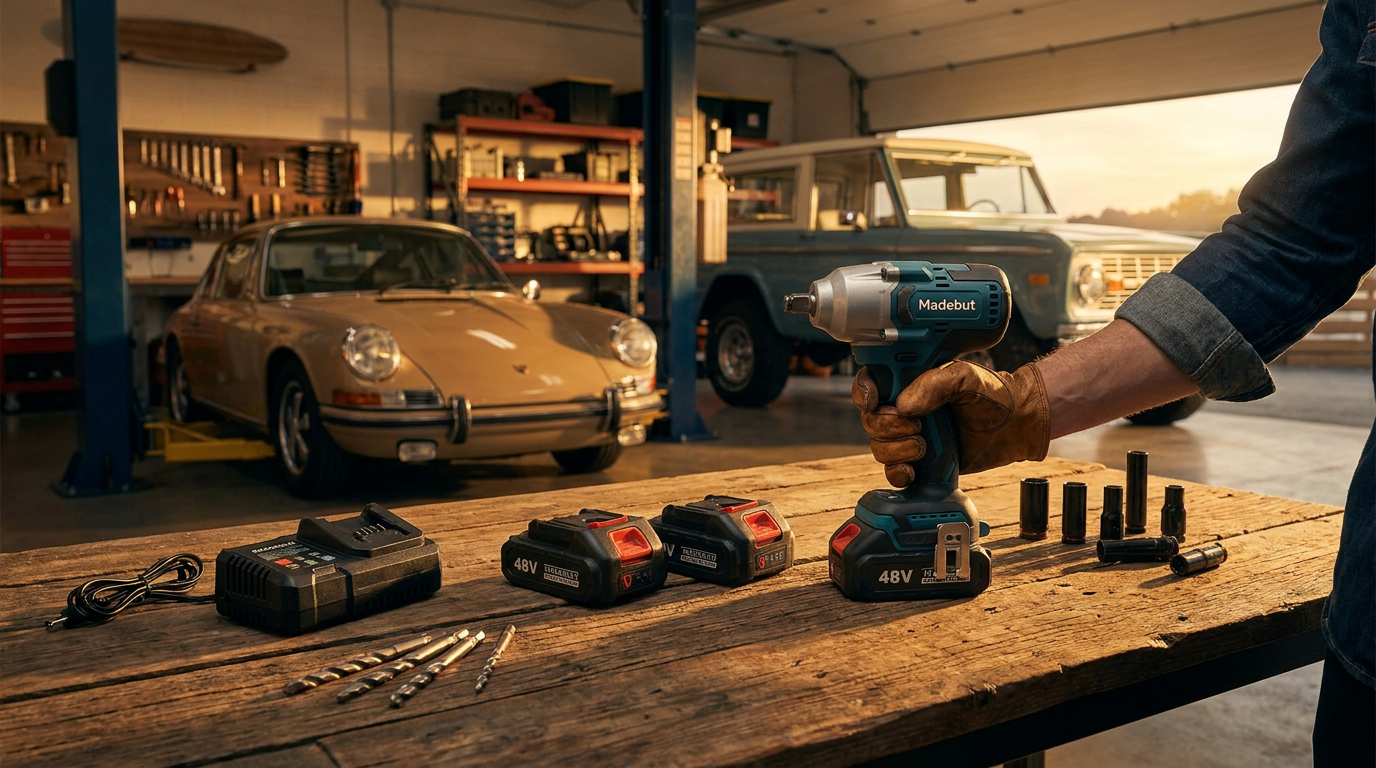
Here's the part nobody talks about: the most crucial phase of installing a wheel is seating the lug nuts correctly before final torquing. A dedicated low-power mode, found on a 3-speed tool like the Madebut Cordless Impact Wrench, is purpose-built for this step. It allows you to quickly and uniformly run down lug nuts until they are snug against the wheel hub, without any risk of over-tightening. This ensures the wheel is properly centered and prevents the dangerous practice of using an impact wrench for the final torque specification. According to automotive best practices from outlets like Car and Driver, final tightening must be done with a calibrated torque wrench. Using a low-power setting first is the most efficient way to prepare for that critical final step in a DIY tire change.
Selectable Speeds vs. Trigger Feathering
Run the math: a typical lug nut requires 80-100 ft-lbs of torque. A delicate plastic undertray fastener might only need 10 ft-lbs, while a large suspension bolt could require over 300 ft-lbs to break free. A tool with selectable electronic speed settings provides predictable, repeatable power for this entire range. The Madebut 3-Speed system manages motor output digitally, offering distinct modes for different applications. This is fundamentally more reliable than attempting to modulate power with the trigger. It provides the high torque needed for heavy-duty removal and the controlled, low torque essential for safe assembly, making it one of the most versatile power wrenches for automotive repair. I'll change my mind when a single-speed tool can demonstrate the same versatility across both delicate and heavy-duty fasteners without requiring constant manual intervention.
Is more torque always better for an impact wrench?
Photo by Anastasia Shuraeva on Pexels
No. While high breakaway torque is necessary for removing stubborn bolts, excessive and uncontrolled torque during installation is a primary cause of stripped threads and damaged parts. The best cordless impact wrench for cars balances high power with low-power control for both removal and assembly.
Why do I need multiple speeds on an impact wrench for cars?
Multiple speed settings allow the tool to adapt to different tasks. A high-speed setting provides the breakaway torque needed for rusted suspension bolts or lug nuts. A low-speed setting is critical for safely and quickly seating fasteners without over-tightening them, preparing them for final torquing with a dedicated torque wrench. When looking for the best cordless impact wrench for your car, this versatility is more important than a single peak torque number.