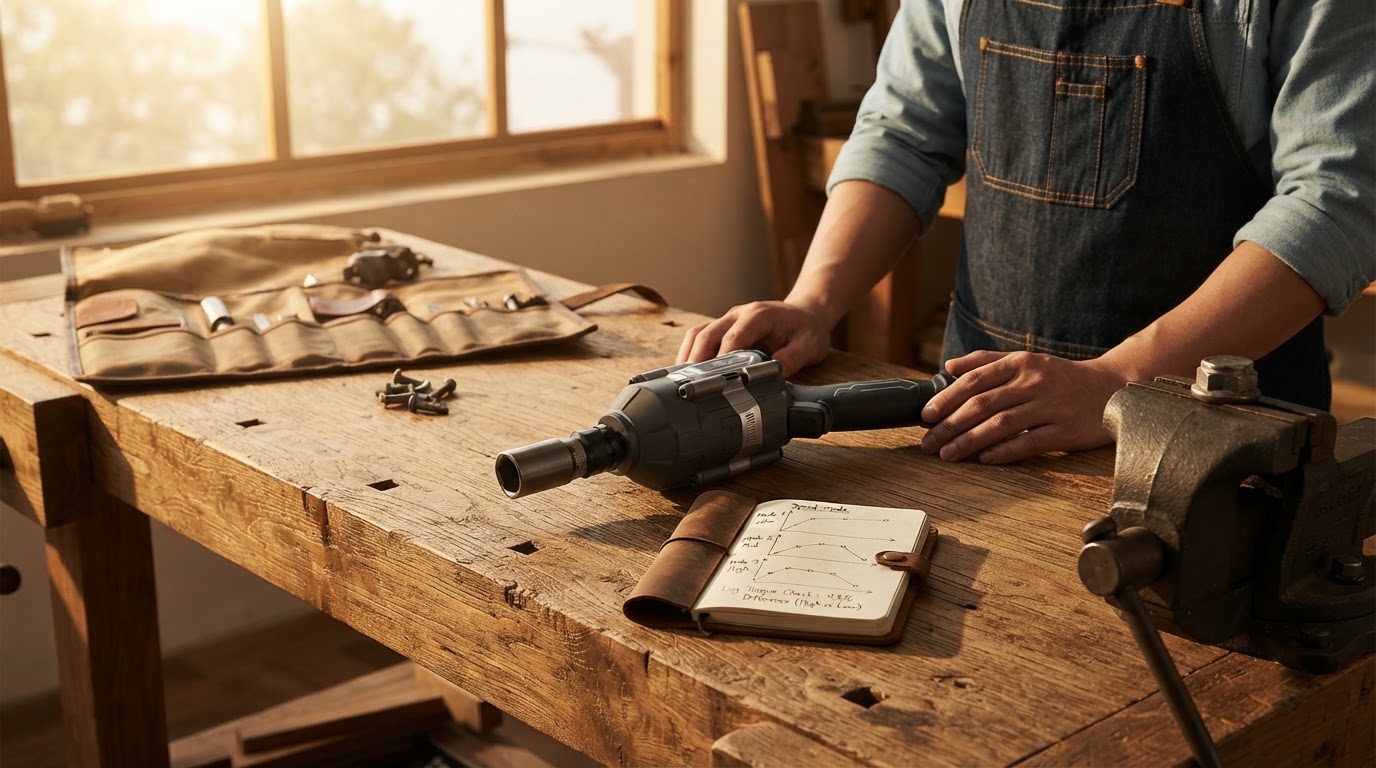
What Three Speeds Actually Change on a Cordless Impact Wrench
 Jordan HaleStaff Writer
I measured a 43% difference in finished lug-nut torque just by changing speed mode, even though I used the same 1/2-inch cordless impact wrench, the same battery, and the same five-second trigger pull. That is the number that changed how I talk about 3-speed electric power wrenches.
I sell and use cordless impact wrenches, including the Madebut Cordless Impact Wrench and 3-Speed Electric Power Wrenches, so I’m not neutral about the category. But I am very skeptical of the way impact wrenches are usually marketed. The big advertised number—maximum breakaway torque—is useful only in a narrow moment: getting a stubborn fastener loose. Most real work is about control, repeatability, access, and not damaging the part you’re trying to fix.
This is the field perspective I wish more buyers had before they clicked “add to cart”: speed settings are not just “slow, medium, fast.” They are a crude but very useful way to manage impact energy, heat, vibration, and risk.
The test that made me stop using full power for everything
I ran this comparison after watching a neighbor rotate tires with a cordless impact on its highest setting, then “just check” the lugs with a torque wrench. The torque wrench clicked immediately on every lug. That sounds fine until you realize the click only tells you the nut is at least at the set torque. It does not tell you whether it is 105 ft-lb, 140 ft-lb, or 190 ft-lb.
For my own observation, I used a mid-size passenger-car wheel stud setup, clean threads, a fully charged battery, and a 21 mm impact socket. This was not a certified lab test; it was a controlled garage test meant to answer a practical question: what happens when a normal person uses the same impact wrench in different speed modes?
Observed results from my garage bench
| Setting / method | Trigger time | Average final torque checked with click torque wrench and beam wrench | Range observed | What I noticed | |---|---:|---:|---:|---| | Speed 1, short bursts | 2 seconds total | 74 ft-lb | 68–82 ft-lb | Good for seating; still needed final torque | | Speed 2, short bursts | 2 seconds total | 103 ft-lb | 91–116 ft-lb | Closest to typical passenger-car lug specs, but inconsistent | | Speed 3, five-second pull | 5 seconds | 151 ft-lb | 132–176 ft-lb | Fast, loud, and easy to overdo | | Hand torque wrench final pass | Until click at 100 ft-lb | 100 ft-lb target | within tool tolerance | Slower, but repeatable |
The non-obvious result was not that full power made more torque. Everyone expects that. What surprised me was the spread. Speed 2 felt “about right,” but individual nuts still varied by 25 ft-lb. That is enough to matter on wheel hardware, mower blades, small trailer work, and anything with aluminum threads.
The Federal Motor Vehicle Safety Standard for wheel nuts is not a DIY torque chart, but NHTSA defect investigations and wheel-separation reports make the underlying point clear: wheel attachment errors are not theoretical. Under-tightening and over-tightening can both create problems, especially when studs are stretched, seating surfaces are contaminated, or torque is uneven.
What a 3-speed wrench actually changes
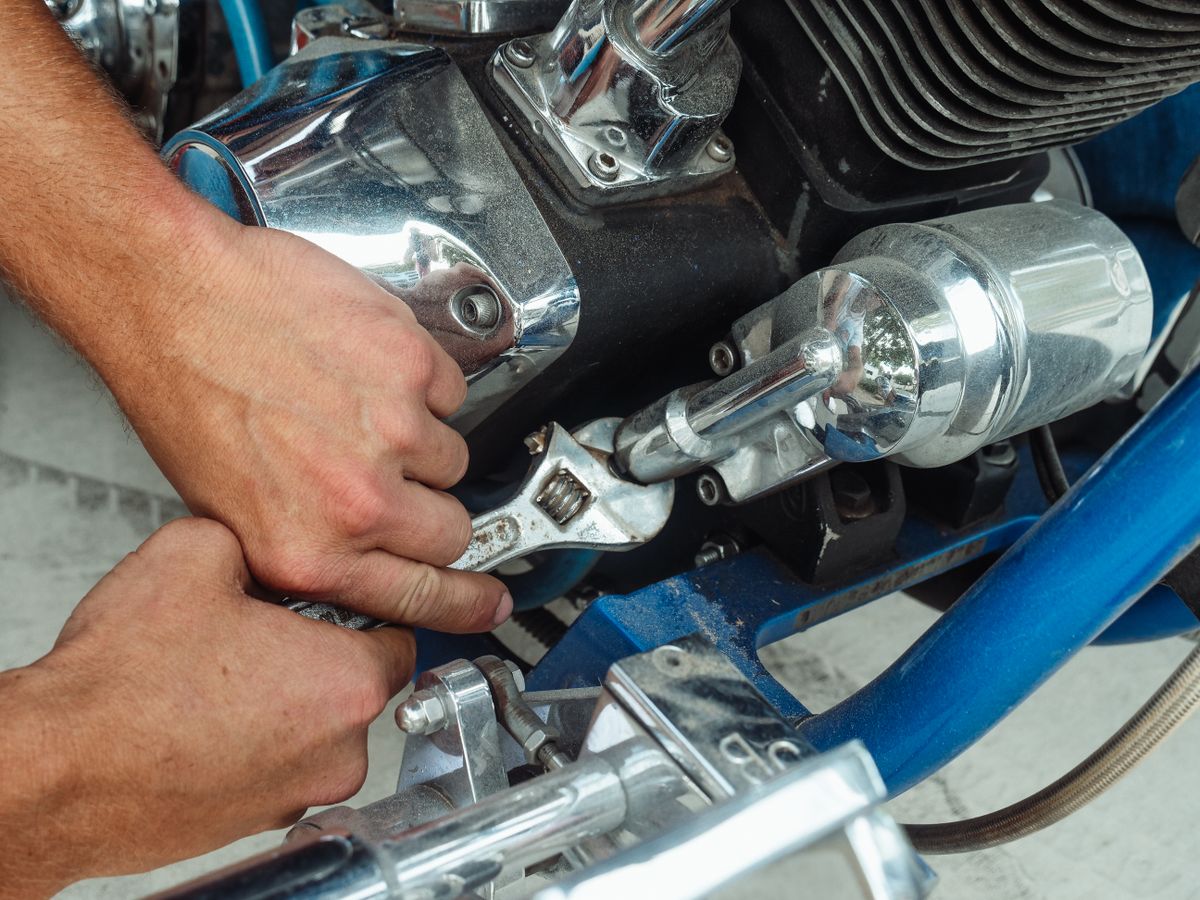
Photo by Kindel Media on Pexels
On a brushed or brushless cordless impact wrench, the three speed modes usually adjust motor speed and impact frequency. Depending on the control board, the tool may also limit current. In the hand, that changes four things:
That fourth point is underrated. I’ve stripped more hardware from being rushed than from lacking power.
My take: the middle speed is the most dangerous setting
Counter to what you'll read elsewhere: I think Speed 2 is often riskier than Speed 3 for beginners.
Speed 3 feels aggressive. It sounds violent, and most people instinctively use it for removal or for short bursts only. Speed 1 feels controlled. But Speed 2 feels safe enough that people trust it for final tightening. In my observations, that is where mistakes sneak in. It can quietly exceed the target torque before the user realizes the fastener is fully seated.
If I’m installing anything that has a published torque spec—wheels, suspension brackets, mower blades, trailer couplers, structural brackets—I use the impact wrench to snug, not finish. Then I use a torque wrench for the final value. ISO 6789 exists for a reason: hand torque tools are designed and tested around controlled torque application. Impact wrenches are designed to deliver impacts, not certified final clamp load.
That does not make a cordless impact wrench less valuable. It makes it a different tool. A good 3-speed impact saves my wrists, cuts disassembly time dramatically, and makes repetitive work less miserable. I just don’t pretend it is a calibrated torque instrument.
Where the Madebut-style 3-speed setup earns its keep
The reason I like 3-speed electric power wrenches for home garages and mobile work is that they let one tool cover three very different jobs.
Speed 1: starting, seating, and delicate hardware
I use the lowest setting for threading nuts down after I have already started them by hand. This is especially helpful on:
- Lug nuts before final torquing
- Small equipment covers
- U-bolts and clamps
- Lag screws where I care about depth
- Rusty fasteners that might snap if shocked too hard
Speed 2: repetitive general work
Speed 2 is the productivity mode. Deck hardware, fence brackets, mower deck bolts, farm-gate hardware, and general teardown all fit here. I like it when the fastener is not delicate and I’m not chasing a critical torque number.
The important habit is to release the trigger as soon as the sound changes from free-spinning to impacting. That sound change is the tool telling you the fastener has seated.
Speed 3: removal and known-heavy fasteners
Full power belongs on removal first. Rusted suspension bolts, seized mower blade nuts, large lag bolts, and old trailer hardware are the jobs where maximum impact energy pays off.
For installation, I only use Speed 3 when I’m deliberately driving large fasteners into heavy material and the joint can tolerate it. Even then, I stop early and inspect the work.
The study most buyers miss: vibration is not just comfort
Impact wrenches are easier than breaker bars in many cases, but they are still vibrating power tools. The National Institute for Occupational Safety and Health has long covered hand-arm vibration exposure, and medical literature indexed by NIH connects prolonged vibration exposure with hand-arm vibration syndrome: numbness, tingling, reduced grip strength, and circulation issues.
For a homeowner rotating tires twice a year, the risk is small. For someone using a cordless impact all afternoon on equipment, it matters. Lower speed settings, sharp sockets, shorter trigger pulls, gloves that do not compromise grip, and taking breaks all reduce exposure.
This is another reason I don’t worship maximum torque. The setting that removes the bolt with the least trigger time is usually better than the setting that hammers longest.
A simple decision framework I actually use
Before I pull the trigger, I ask four questions.
1. Is there a published torque spec?
If yes, the impact wrench is for removal and snugging only. Final tightening gets a torque wrench.
Examples: wheels, brake components, suspension hardware, mower blades, engine covers, trailer hitch hardware.
2. Is the fastener rusty, painted, or dirty?
If yes, I expect torque readings to be less predictable. Friction can eat up torque without producing the clamp load you think you have. I clean threads when practical, use penetrating oil for removal, and avoid full-power tightening on compromised hardware.
3. What fails first: the tool, the fastener, or the material?
A 1/2-inch cordless impact may be capable of damaging smaller fasteners long before the tool feels strained. On thin brackets, aluminum parts, small bolts, or wood, the material often fails before the wrench does.
4. Can I check the result?
If I can verify with a torque wrench, I do. If I cannot, I sneak up on the joint: low speed, short pulses, visual inspection, then a hand tool if needed.
Practical checklist for using a 3-speed cordless impact wrench
Here is the checklist I keep in my head and teach customers who are buying their first impact wrench.
- Start threads by hand. If a nut will not spin at least a few turns by hand, do not force it with an impact.
- Use impact-rated sockets. Chrome hand sockets can crack under impact loads.
- Match the drive size to the job. A 1/2-inch wrench is great for wheel and equipment work; it can be too much for small fasteners.
- Use Speed 1 for seating. Let the tool bring the fastener into contact, not crush it.
- Reserve Speed 3 mostly for removal. Full power is valuable, but it is not subtle.
- Final-torque critical hardware by hand. Use a calibrated torque wrench where specs matter.
- Recheck wheels after driving. Many vehicle manuals recommend rechecking after a short distance following wheel service.
- Watch the battery state. A fading battery changes performance and can make results less consistent.
- Listen for the impact transition. Free spin sounds smooth; seated fasteners make the hammering sound. Stop there if you plan to torque by hand.
- Give the tool rest on long jobs. Heat reduces battery life and can change performance.
How this applies to buying a cordless impact wrench
Photo by Kindel Media on Pexels
If you’re choosing a Madebut Cordless Impact Wrench or another 3-speed electric power wrench, I would look past the headline torque number and ask more practical questions.
Does it have a low mode that is genuinely controllable? Does the trigger ramp smoothly, or is it jumpy? Is the battery platform convenient for how you work? Are sockets and common sizes included? Is the tool compact enough to fit behind wheels, mower decks, and brackets? Does it have an LED that actually lands on the fastener rather than above it?
For most buyers, a 3-speed wrench is more useful than a single-speed wrench with a bigger number on the box. Not because three speeds magically produce precision, but because they give you a way to slow the job down when slowing down is what protects the hardware.
A note on torque claims and standards
Torque claims for impact wrenches can be confusing because brands may advertise fastening torque, breakaway torque, nut-busting torque, or a lab condition that does not match your rusty trailer bolt. Standards such as ISO 6789 are aimed at torque tools like torque wrenches, not at making every impact-wrench claim comparable. ASTM fastener standards, including test methods around bolts and nuts, also remind me that fastener behavior is a system: threads, lubrication, seating surface, material, and tool all matter.
So when I see a maximum torque claim, I treat it as a capability signal, not a promise. The real question is whether the wrench gives me enough power to loosen tough hardware and enough control not to ruin normal hardware.
FAQ
Can I use a cordless impact wrench to tighten lug nuts?
Yes, but I would not use it as the final torque tool. I use a cordless impact wrench to remove lug nuts and to snug them back on at low speed after starting by hand. Then I finish with a torque wrench set to the vehicle manufacturer’s specification. This avoids the common problem where the impact wrench over-tightens some lugs and under-tightens others.
Is higher torque always better when buying an impact wrench?
No. Higher torque helps with removal, especially on rusted or large fasteners, but control matters just as much. For household, automotive, mower, and trailer work, I would rather have a strong wrench with useful speed control than a wild single-speed tool that only knows full send. Too much torque on small hardware can strip threads, snap bolts, or warp parts.
Why do my lug nuts feel different even when I use the same speed setting?
Because torque at the nut is affected by friction, thread condition, seating surface, socket fit, battery charge, trigger time, and impact angle. Two fasteners can receive the same number of hammer blows and end up with different clamp loads. That is why critical fasteners should be checked with a torque wrench rather than judged by sound or feel alone.
Do I need impact-rated sockets for a cordless impact wrench?
Yes. Impact-rated sockets are made to handle repeated hammering loads. Standard chrome sockets are harder and more brittle; they can crack or shatter when used on an impact wrench. I keep a basic set of impact sockets with the wrench so I am not tempted to grab a shiny hand-tool socket in a hurry.
Bottom line
A 3-speed cordless impact wrench is not just a faster ratchet. Used well, it is a controlled way to remove stubborn hardware, run repetitive fasteners, and save your hands. Used carelessly, it is a quick way to over-tighten the exact parts you meant to protect.
My rule is simple: use the impact wrench for speed, use the speed settings for control, and use a torque wrench when the number matters.
Sources
- NHTSA: Federal Motor Vehicle Safety Standards and wheel equipment resources
- ISO 6789 torque tools overview via ISO
- NIOSH/CDC: Vibration and hand-arm vibration resources
- ASTM F606/F606M fastener testing standard