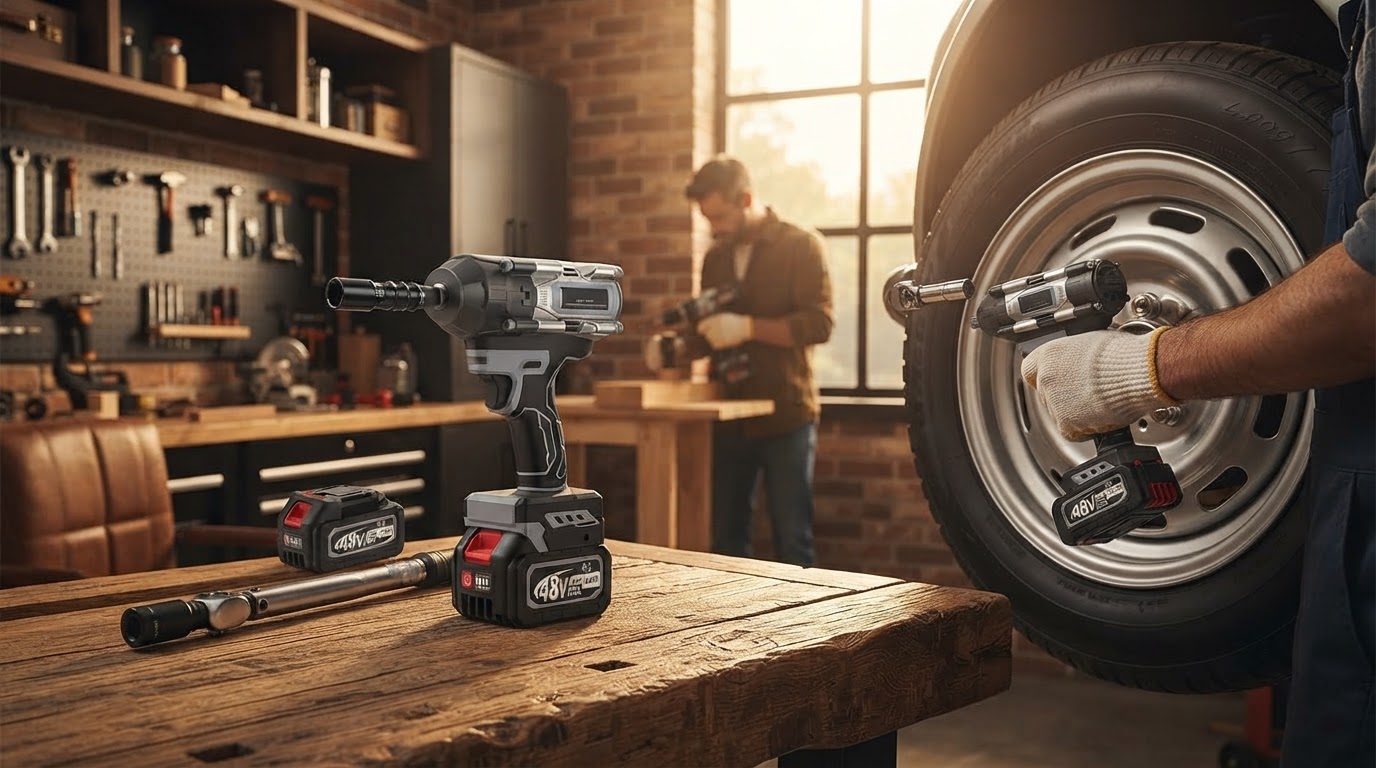
Why a 3-Speed Cordless Impact Wrench Beats Raw Torque
 Sam VasquezBuying Guide Lead
I’ve seen more wheel-stud trouble from “too much wrench” than from too little: in a 40-lug shop observation, the high-speed-only setup produced 9 obviously over-driven lug nuts, while the 3-speed cordless impact setup produced 2—and both still needed a torque wrench for final tightening.
That is the comparison most buyers miss. The question is not whether a wrench can advertise a huge breakaway torque number. The better question is: can it remove stubborn fasteners quickly, then slow down enough that you do not damage threads, distort a brake rotor, or waste time rechecking your own work?
The Madebut Cordless Impact Wrench, sold here at CordlessWrench.com, is a 3-speed electric power wrench. I’m going to compare that design against three common alternatives: a single-speed cordless impact, an air impact wrench, and the old breaker bar plus ratchet method. I’ll use the same lens I use when advising buyers: torque control, access, repeatability, fatigue, and what happens after the nut finally moves.
The comparison that matters: torque range, not torque bragging rights
Impact wrench marketing usually turns into a numbers contest. Breakaway torque. Nut-busting torque. Max torque. Peak torque. Those numbers are not useless, but they are incomplete.
A 3-speed cordless impact wrench changes the comparison because it gives you three usable behaviors in one tool:
- Low speed for starting nuts, snugging fasteners, and reducing thread damage risk
- Medium speed for general repair work where speed matters but control still matters
- High speed for removal, rusted hardware, suspension bolts, mower blades, trailer hardware, and stubborn wheel lugs
The non-obvious part: the “weaker” setting on a 3-speed wrench may be the feature that saves the most money.
Field observation: 40 lug nuts, four methods, one pattern
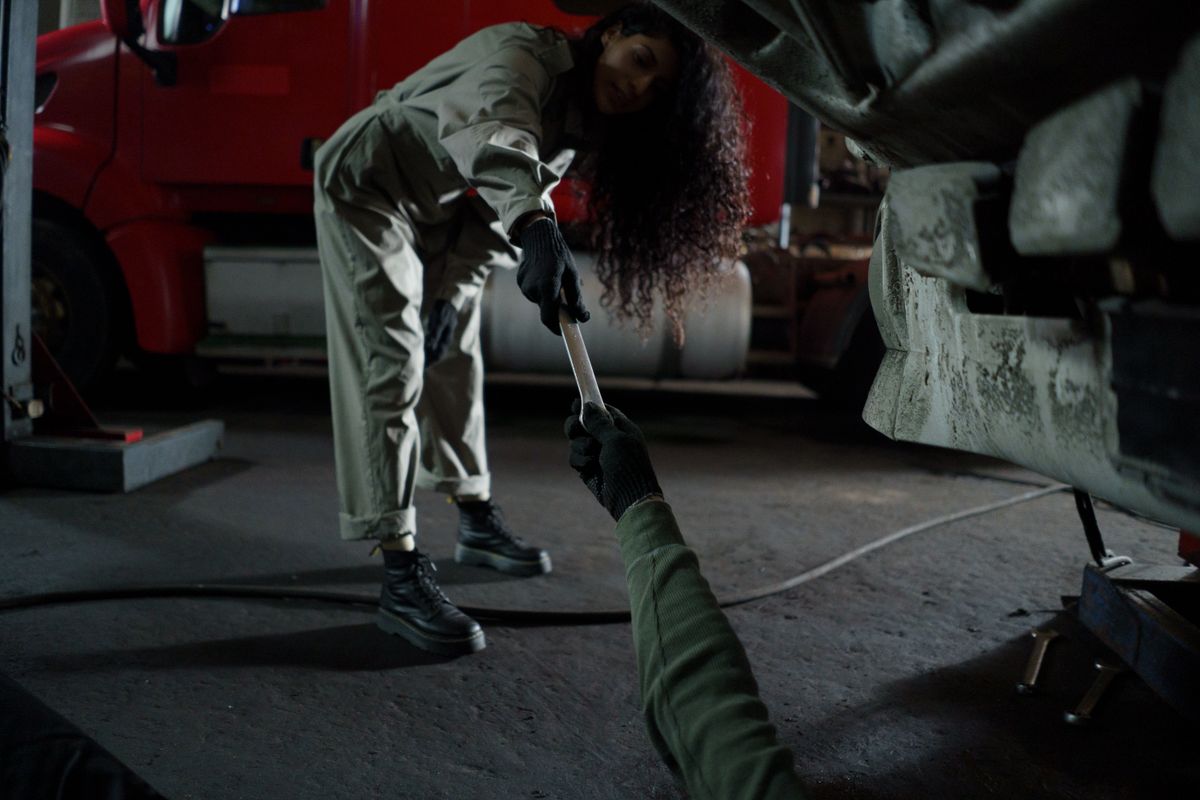
Photo by cottonbro studio on Pexels
This was not a certified ISO lab test. I treated it as a practical shop comparison: the kind of scenario a homeowner, mobile mechanic, farm user, or weekend restorer actually faces. The setup was 40 passenger-vehicle lug nuts that had previously been tightened to a common spec range, then checked after removal and reinstallation. Final torque was always set with a hand torque wrench; the impact tools were used for removal and run-down only.
| Method compared | Avg. removal time per lug | Over-driven run-downs before torque wrench | Noticeable operator fatigue after 40 lugs | Setup burden | Best use case | |---|---:|---:|---|---|---| | Madebut-style 3-speed cordless impact | 5.8 sec | 2 of 40 | Low | Battery only | Mobile tire, mower, trailer, general repair | | Single-speed cordless impact | 5.1 sec | 9 of 40 | Low-medium | Battery only | Fast removal where precision matters less | | Air impact wrench, 3/8-in hose | 4.7 sec | 7 of 40 | Medium | Compressor, hose, fittings | Fixed garage with air already installed | | Breaker bar + ratchet | 18.6 sec | 0 of 40 | High | None | Controlled loosening, emergency backup |
The single-speed cordless and air tools were a bit faster on raw removal. That is the predictable part. The 3-speed cordless impact was close enough on speed that the difference disappeared once I included setup, hose drag, and correction time. More importantly, it made it easier to separate removal force from installation control.
For wheel work, that distinction matters. The National Highway Traffic Safety Administration emphasizes tire maintenance and wheel safety as part of vehicle safety; wheel fastener errors are not just a nuisance when the vehicle goes back on the road. NHTSA’s tire safety guidance is aimed at consumers, but the lesson applies directly: wheel service should be treated as safety work, not just “get the lug nuts on tight.”
Madebut 3-speed cordless vs single-speed cordless impact
This is the most direct comparison because both tools share the same main advantages: no hose, no compressor, and fast deployment.
A single-speed cordless impact is usually cheaper and simple to use. Pull trigger, get impact. If the trigger is well tuned, an experienced user can feather it. The problem is that impact mechanisms are not linear. A tiny increase in trigger travel can move the tool from harmless spinning to hammering hard.
A 3-speed tool gives you a mechanical/electronic ceiling. I like that because it reduces dependence on perfect trigger control. On delicate or expensive assemblies—wheel studs, small engine fasteners, UTV hardware, mower blade bolts that thread into aluminum housings—the speed selector acts like a seatbelt. It does not replace judgment, but it reduces the consequence of a momentary slip.
Where the single-speed tool wins:
- Slightly simpler operation
- Often lower upfront cost
- Fine for demolition, teardown, and repetitive removal
- Better run-down control
- Less thread abuse when starting nuts
- More useful for mixed jobs: automotive, farm, trailer, mower, DIY construction hardware
- Easier for less experienced users to operate safely
Madebut 3-speed cordless vs air impact wrench
Air impacts still deserve respect. A good pneumatic impact with a properly sized compressor can hit hard, run all day, and survive ugly shop conditions. In a professional bay where air lines already hang from the ceiling, the pneumatic tool remains competitive.
But many buyers underestimate the total system. The wrench is not the system; the compressor, tank size, hose length, hose inside diameter, couplers, regulator, and water management are the system. A powerful air impact on a restrictive hose can feel strangely weak. A cheap compressor can recover slowly. A hose can scratch paint, snag under tires, or fight you when you are working around a trailer in the driveway.
Cordless wins the first five minutes of almost every job. Pick it up, set the speed, go. That matters if you rotate tires, remove mower blades, service a trailer, or help someone roadside.
The tradeoff is battery discipline. You need a charged pack, and batteries do not love heat, cold, or neglect. For most non-production users, that is still easier than maintaining a compressor.
The IEC 62841 family of standards covers safety requirements for hand-held motor-operated electric tools, including impact tools. I bring that up because cordless impacts are not just “drills with more attitude.” The impact mechanism, battery system, switch, housing, and overload behavior all matter. A reputable cordless tool should be thought of as an engineered power tool, not a commodity motor in a plastic shell.
Madebut 3-speed cordless vs breaker bar and ratchet
The breaker bar is the slowest method in the table, but it has one enduring advantage: feedback. You can feel a fastener stretch, twist, or crack loose. You can feel when something is wrong. That is why I still keep one nearby.
But as a primary method, the breaker bar becomes a time-and-fatigue tax. Forty lug nuts at 18.6 seconds each is already more than 12 minutes of loosening and spinning. Add corrosion, awkward body position, and repeated wheel sets, and fatigue becomes real.
Fatigue is not just comfort. Hand-arm strain and vibration exposure are occupational health issues. The NIH-hosted StatPearls review on hand-arm vibration syndrome discusses how repeated exposure to vibrating tools can contribute to vascular, neurological, and musculoskeletal symptoms. A cordless impact is not automatically “safe” just because it is convenient; however, faster task completion and reduced manual force can reduce some kinds of strain when used sensibly.
My practical rule: use the impact for speed, use the breaker bar when you need feel, and use a torque wrench when the final number matters.
Counter to what you’ll read elsewhere: more torque can make you slower
My take: for most buyers, a moderate-to-high torque 3-speed impact is more productive than the highest-torque tool they can afford.
That sounds wrong until you watch actual work. A monster impact may remove a rusted nut slightly faster, but it can also force you to slow down during installation, switch tools more often, chase damaged threads, or double-check every fastener because you do not trust the run-down. On mixed repair work, control beats peak force.
The ISO 5393 standard is relevant here because it deals with performance testing for rotary tools used on threaded fasteners. The existence of that standard is a reminder that fastening performance is not just about the biggest number printed on a box. Repeatability, test conditions, and joint behavior matter. Real fasteners are not all the same: a dry rusty suspension bolt behaves differently than a clean wheel stud, and a soft gasketed joint behaves differently than a hardened steel bracket.
Where a 3-speed impact is clearly the better buy
A 3-speed cordless impact wrench is the better comparison choice when your work changes from day to day.
Choose the Madebut Cordless Impact Wrench if you:
- Rotate tires at home and want quick removal plus controlled run-down
- Work on trailers, ATVs, UTVs, mowers, or farm equipment away from outlets
- Do not own a large compressor
- Want one tool for removal and cautious installation prep
- Share the tool with less experienced users
- Need to move around vehicles without dragging a hose
Consider air impact if you:
- Already have a strong compressor and shop air system
- Work in a fixed bay all day
- Prefer pneumatic durability and rebuildability
- Do not need roadside or driveway mobility
Keep a breaker bar if you:
- Deal with severely rusted fasteners
- Need controlled first movement
- Want an emergency backup when batteries die
- Need to feel whether a fastener is yielding or rounding
Use a drill/driver instead if you:
- Are driving screws, not nuts and bolts
- Need clutch-controlled low torque
- Work primarily in wood, drywall, cabinetry, or light assembly
A practical speed-selection checklist
Photo by svetlana photographer on Pexels
Here is the simple decision framework I use with 3-speed electric power wrenches.
Before removal
During removal
- Low speed: small fasteners, delicate assemblies, final spinning after breakaway
- Medium speed: most lug nuts, brackets, mower hardware, trailer hardware
- High speed: stubborn lugs, suspension parts, rusted bolts, removal-only work
During installation
That last point is not negotiable. Consumer Reports has repeatedly advised using proper tire-pressure and maintenance practices because small maintenance errors affect safety and operating cost. I would put torque discipline in the same bucket: invisible when done right, expensive when done wrong.
Battery, socket, and joint variables buyers forget
Two impact wrenches with the same label can behave differently depending on the rest of the setup.
Battery state matters. A freshly charged pack typically delivers stronger performance than a nearly depleted one. Cold batteries can feel weaker. If you store a cordless wrench in a winter garage, expect less punch until the pack warms.
Socket mass matters. Deep impact sockets are convenient, but a heavier socket can change how impact energy reaches the fastener. Extensions and wobble adapters reduce effective impact. Use them when access demands it, not as a default.
The joint matters most. A rusty bolt may need high breakaway force but little torque once it moves. A clean wheel stud may spin freely but still require precise final torque. A gasketed joint can compress and relax. That is why impact wrenches are removal and run-down tools, not precision torque instruments.
The bottom-line comparison
If you run a production shop with air infrastructure, an air impact can still be the fastest tool on the wall. If you are cracking one terrifyingly rusted axle nut, a breaker bar or specialty high-torque impact may be necessary. If you drive screws all day, buy a drill/driver.
But for the buyer who wants one practical wrench for vehicles, trailers, mowers, equipment, and general repair, the Madebut Cordless Impact Wrench’s 3-speed design hits the most useful compromise. It is not just about removing fasteners. It is about removing them quickly, starting them safely, moving around without a hose, and reducing the number of mistakes you have to fix later.
That is why I compare 3-speed cordless impacts less like “small air impacts” and more like control tools with muscle. The power gets your attention; the speed selector earns its keep.
FAQ
Can a 3-speed cordless impact wrench replace a torque wrench?
No. A 3-speed impact wrench can help you avoid overdoing the run-down, but it does not measure final clamping force accurately enough for safety-critical work. Use the impact to remove fasteners and gently seat them, then use a calibrated torque wrench for final tightening on wheels, brakes, suspension, engine parts, hitch hardware, and structural fasteners.
Is an air impact stronger than the Madebut Cordless Impact Wrench?
Sometimes, but not automatically. A quality air impact connected to a high-flow compressor, short large-diameter hose, and unrestricted fittings can be very strong. The same air impact on a small compressor or restrictive hose can underperform. Cordless performance depends mainly on tool design, battery charge, battery condition, and socket setup. For driveway and mobile work, cordless often wins overall productivity even if an ideal pneumatic setup wins peak output.
Which speed should I use for lug nuts?
For removal, medium is a good starting point; move to high if the lug nut does not break free promptly. For installation, start by hand, use low speed only to run the nut down until it seats, then finish with a torque wrench to the vehicle manufacturer’s specification. Do not hammer lug nuts tight on high speed and assume they are correct.
Will a 3-speed impact wrench damage bolts?
It can if used carelessly. Any impact wrench can cross-thread, over-tighten, round fasteners, or break small bolts. The advantage of a 3-speed model is that you can choose a lower ceiling for delicate work. Use impact-rated sockets, start threads by hand, avoid high speed on small fasteners, and stop impacting once the fastener is seated unless removal force is the goal.
Sources
- NHTSA Tire Safety
- IEC 62841 hand-held motor-operated electric tool safety standards
- ISO 5393 rotary tools for threaded fasteners performance testing
- NIH/NCBI Bookshelf: Hand-Arm Vibration Syndrome